


Meet the Apparatus!

Updated: Aug 2

The Pilates apparatus was invented by Joseph Pilates (the man behind the Pilates method which was originally called Contrology but later renamed Pilates in his honour).
The early guises of the apparatus were designed during his internship on the Isle of Man in World War I. He attached bed springs to the hospital bed frames to assist patients who were bed bound and unable to walk to assist with their rehab. Joe later went on to create other pieces of apparatus (Cadillac, Wunda Chair, Ladder Barrel etc.).
The apparatus is designed to work the whole body to build strength improve flexibility and balance. It’s not ‘harder’ than the mat, it assists and supports the body to help build the strength to execute the mat exercises. In fact the mat actually came AFTER the apparatus and was set as your homework to do in addition to your apparatus sessions.
Pilates was designed to be a system, not just a Reformer or Mat, but apparatus that works together to support and strengthen the body.
After 4 months of waiting, everything has now arrived and I am excited to b a fully equipped apparatus studio. I’m dying to introduce you to them all… check them out below!
  | The Reformer The Reformer looks like a bed with springs, a moving carriage on wheels, ropes and pulleys with handles and straps attached. By adjusting the spring tension, the machine can either support your bodyweight or add resistance, allowing for a low-impact, full-body workout that improves strength, flexibility, and posture. I have 2 Reformers, a classical version and a contemporary version….and both are very different beasts! Contemporary reformers (zebra print one) usually have 5 springs of varying resistance, from light to heavy. Their footbar is adjustable and they tend to have loops rather than handles attached to the ropes. Classical machines (silver and blue) have 4 springs, all of them the same resistance. The footbar sits in a fixed position, also instead of ropes and loops, they have leather straps and handles. The different set ups allow the intensity to be varied from person to person, making the Reformer an incredibly versatile piece of equipment. Not just to be used to work the body but also as a rehab tool too as the springs also offer incredible support. |
The Cadillac and Wall Unit The Cadillac looks like a raised padded table with a metal frame and a canopy built over it, a bit like a 4 poster bed. The Cadillac is often considered the most versatile Pilates apparatus, with hundreds of possible exercises ranging from very gentle to highly athletic. It consists of passed table that doesn’t move, leg and arm springs, roll down bar, push through bar, trapeze and fuzzy cuffs for hanging and supported exercises. The Wall Unit (or Tower) is essentially the spring system from the Cadillac, mounted to the wall (or a Tower at the back of a Reformer). Unlike the Cadi, it doesn't have the overhead canopy or trapeze bar, so you can’t do the inversion exercises on this but can do everything else. Both pieces place greater emphasis on controlling your body against the resistance of springs rather than balancing on a sliding platform. As a result, your body will feel stretched, amazing and limber after just 30 mins in the company of these beauties. |   |
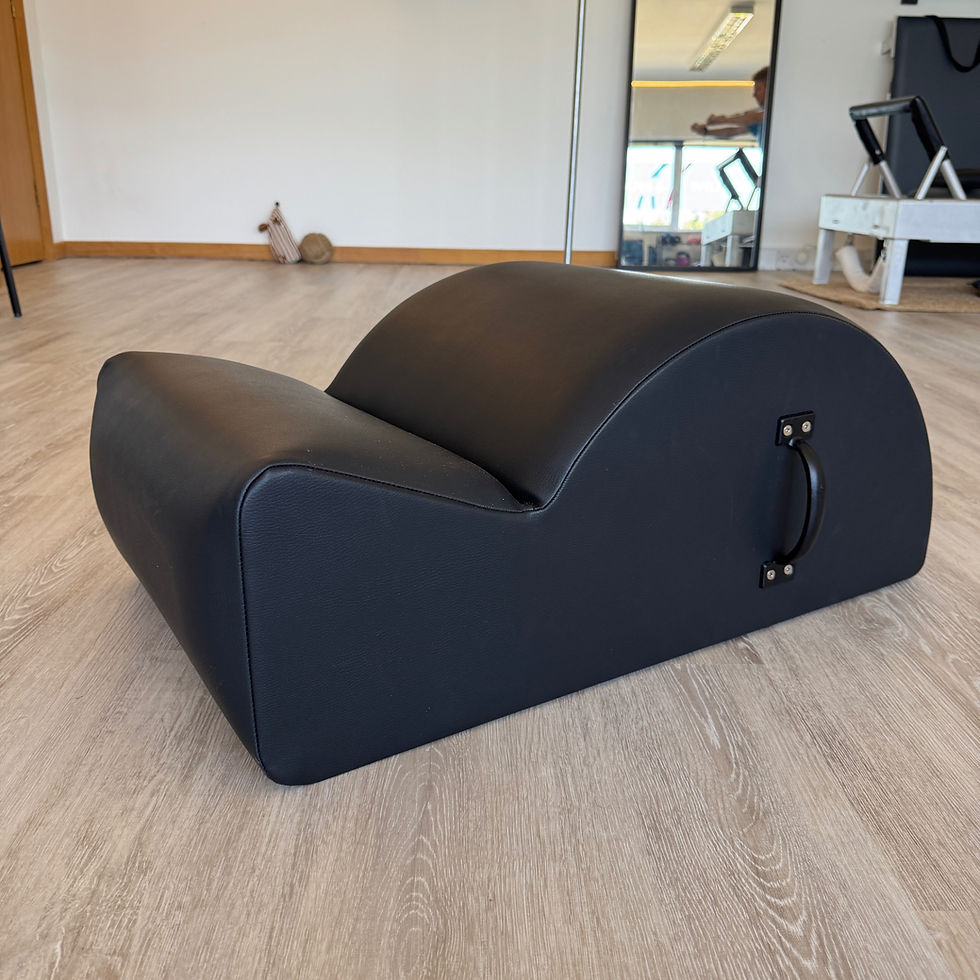   | The Barrels These 3 pieces of Pilates equipment are all part of the Barrel family. Unlike the Reformer or Cadi, they don't use springs. Instead, they use their curved shape to help you strengthen, stretch and mobilise your body. The Ladder Barrel is the largest of the bunch. It consists of padded, curved barrel, a ladder with rungs and a sliding frame that can be adjusted for different heights. The Ladder is ideal for deep stretching, spinal extension and advanced flexibility& balance work. The Spine Corrector is much smaller and sits on the mat. It consists of a small step/platform and a round barrel with handles for support. The curved surface gently supports the spine, making extension exercises feel comfortable and controlled. Best for improving posture, restoring spinal mobility and strengthening the core in a supported way. The Arc Barrel is the smallest and most portable of the three. It’s light weight and easier to carry than the other two, it’s gentle curve is designed to support the natural shape of the spine. It’s ideal for beginners or pregnant ladies as it helps people maintain good form without putting too much strain on the neck, abs or lower back. Although they look similar, each barrel serves a different purpose of support or challenge. |
The Chairs My absolute favourite of the bunch! The chairs are compact, Pilates machines that provide a surprisingly challenging full-body workout. Despite their small size, they're among the most demanding pieces of Pilates apparatus…small and mighty, much like me lol! The Wunda Chair was designed by Joseph Pilates as a piece of furniture (an armchair) that could also be used for exercise, lots of his clients had these in their homes. It consists of a sturdy wooden box with a padded seat, a pedal and 2 x springs. The pedal moves up and down as you press against the spring resistance. The Stability Chair is the contemporary, modern evolution of the Wunda Chair. It has the same basic design but includes handles for support, a split pedal and 4 springs instead of 2 of varying resistance (light and heavy). These features make it much easier to adapt exercises for beginners and rehab. There is also the Baby Chair and Electric/High Chair which I do not have in my studio. The Chairs require a lot of strength and control because many exercises are performed standing or supporting your own body weight. Often working in standing, kneeling or single-leg positions, the chair ultimately challenges your balance far more than the Reformer. |   |
 | The Ped-O-Pull The Ped-O-Pull is one of the lesser-known pieces of classical Pilates Apparatus. It looks deceptively simple but don’t be fooled! It's designed to improve posture, balance, spinal alignment, and breathing. The Ped-O-Pull consists of a sturdy base that you stand on, a vertical pole (to mimic the spine) and 2 x springs with handles at the end. The movements are generally small and precise rather than large or strenuous, making the exercises all about control. The Ped-O-Pull is particularly effective for improving postural awareness, spinal alignment, shoulder stability, core control and of course balance! |
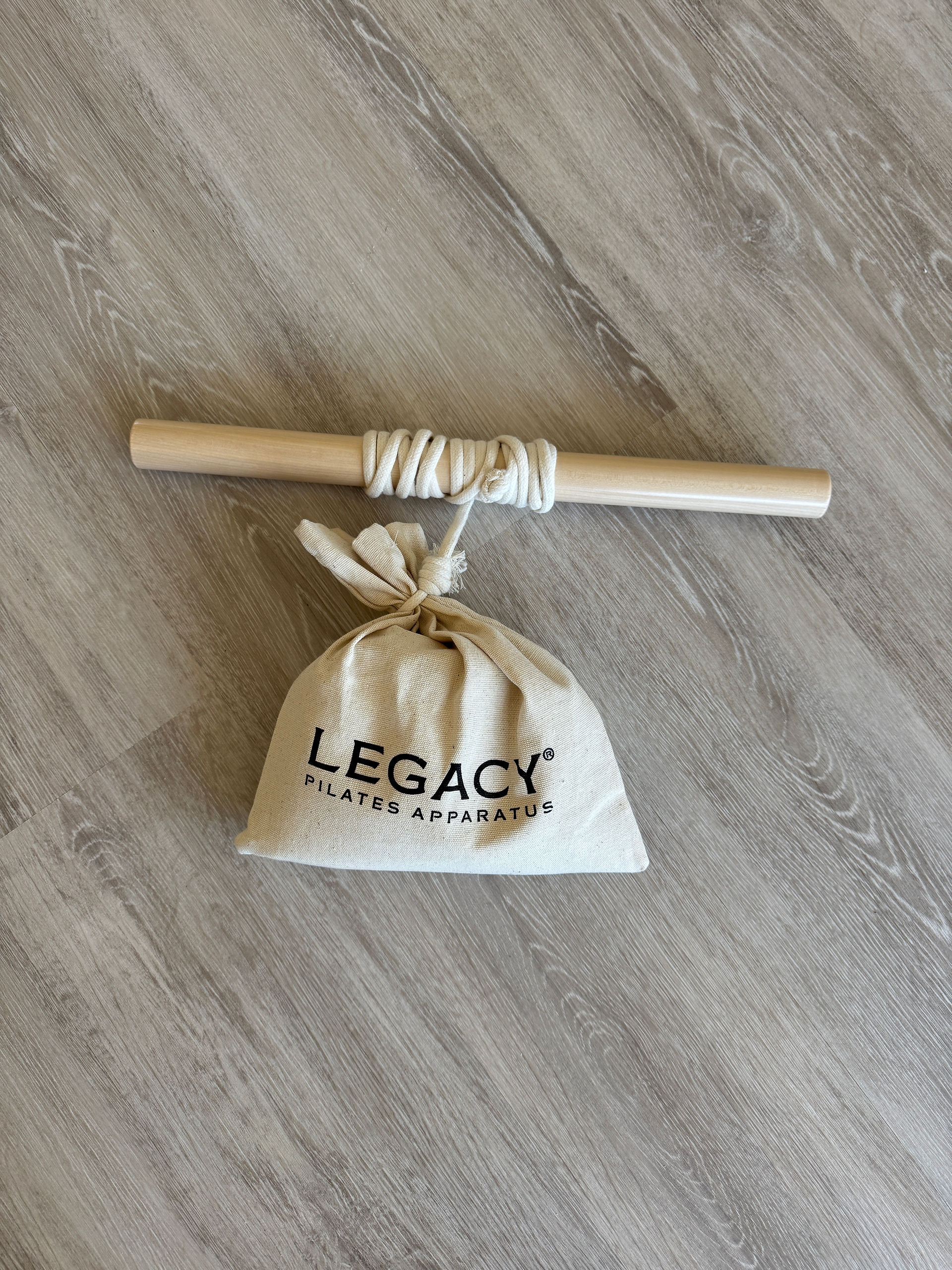
The Small Props In addition to the large apparatus, Pilates uses a variety of small props to improve strength, alignment, body awareness, and movement quality. Many of these were designed by Joseph Pilates, while others were added later in contemporary practice. The Foot Corrector is a small device with a spring-loaded pedal. It was designed by Joseph Pilates to strengthen and mobilise the feet and ankles. Exercises involve pressing the spring with different parts of the foot while maintaining proper alignment through the rest of the body. The Neck Exerciser is much less common in modern studios, it was designed to strengthen the muscles of the neck, improve posture, and support healthy spinal alignment. It’s typically used with the cadi/wall unit and consists of a padded headband, a spring and a harness that provides resistance. The Neck Exerciser was developed to strengthen the muscles that support the head and cervical spine. The Magic Circle (also nicknamed ‘The Ring of Fire”) is a flexible ring, usually about 14–15 inches in diameter, with padded handles on either side. The ring can be squeezed or gently resisted using hands, knees, ankles or thighs. The ring doesn't create heavy resistance; instead, it encourages controlled muscle activation and precise movement. Did you know…..Joseph Pilates originally made the first versions from the metal rings that wrap around beer kegs? | The Weighted Sandbag is a soft, fabric-filled weight, typically ranging from 0.5-2kg. It’s attached to a piece of dowling with a bit of rope. The bag is especially good for strengthening forearm and grip strength. Typically not used in a class workout but more as accessory or rehab work. The small Pilates Ball is a soft, inflatable ball, typically 7–10 inches (18–25 cm) in diameter and is typically used in mat classes. It can be used to provide support for the spine, neck, or pelvis, challenge balance and core control and help with hip and pelvis stability. A Flex/Resistance Band is a long, flat elastic band available in different resistance levels, usually colour coded from light to heavy. It can be used to add resistance without the use of weights, assist with stretching and help support movement, particularly when used in mat classes. |




Together, it’s like Avengers Assemble…each one brings their own thing to the table and together they make a hell of a team. 🫡👊🏻
I am very proud to be a fully equipped and dedicated Pilates studio, so why settle for just Mat or Reformer Pilates when you can have the whole ensemble???


Comments